Elite IB schools in Thailand stand out because they combine a globally respected curriculum with strong teaching quality, modern facilities, and a clear focus on student growth. In 2026, many families choose these schools because they want an education that supports academic success, critical thinking, creativity, and international-mindedness.
The strongest schools usually have proper International Baccalaureate authorization, experienced teachers, well-designed learning environments, and good university placement records. They also tend to offer a balanced student experience that includes academics, wellbeing, service, arts, and sports. In Thailand, these schools are especially popular in cities such as Bangkok, Chiang Mai, and Phuket, where families are looking for internationally recognized education with a multicultural environment.
At a Glance: What Makes an IB School Feel “Elite”?
| Key Area | What to Look For | Why It Matters |
| IB Authorization | PYP, MYP, and DP authorization | Shows the school meets IB standards across age groups |
| Teaching Quality | Experienced, IB-trained teachers | Supports deeper learning and stronger student outcomes |
| Curriculum Delivery | Inquiry-based, concept-driven learning | Builds critical thinking and independence |
| Facilities | Labs, makerspaces, arts, sports, outdoor learning | Helps students learn through experience |
| Student Outcomes | Strong DP results and university placements | Reflects academic preparation and support |
| Wellbeing | Counseling, advisory systems, mentoring | Supports personal growth and resilience |
| Community Impact | Service learning and sustainability projects | Encourages responsible, globally minded students |
Academic Excellence and IB Authorization
A major feature of elite IB schools in Thailand is full or advanced IB authorization. The best schools often offer more than one IB programme, including the Primary Years Programme, Middle Years Programme, and Diploma Programme. This creates a smoother learning journey from early years through high school.
IB authorization is not simply a label. Schools go through a detailed evaluation process and must show they are committed to the IB learner profile, inquiry-based education, and regular improvement. In practice, this means schools are expected to maintain high teaching standards, invest in staff training, and review their systems on an ongoing basis.
Many leading schools in Thailand also report Diploma Programme results above the global average, which gives families more confidence in the quality of academic support. However, strong IB schools are not only focused on exam scores. They also help students become thoughtful, principled, and capable learners who can apply knowledge in real-life contexts.
Why IB Authorization Matters
| Element | What It Means for Families |
| Official IB approval | The school has met IB requirements |
| Multi-programme pathway | Children can continue through a consistent learning model |
| Ongoing evaluation | The school must continue improving |
| Clear standards | Families can compare schools more confidently |
Rigorous Curriculum Implementation
Elite IB schools do more than offer the IB name. They implement the curriculum in a way that feels purposeful and student-centered. In the Primary Years Programme, students often learn through units of inquiry that connect several subjects together. This helps them see how ideas relate to the real world instead of learning each topic in isolation.
In the Middle Years Programme, students take on more responsibility through independent work, projects, and community-based learning. By the Diploma Programme stage, students are expected to think critically, manage research, and complete both internal and external assessments. This gradual progression helps students build confidence and academic maturity over time.
Technology also plays an important role. Many strong IB schools integrate digital tools into science, research, assessment tracking, and classroom collaboration. Parents are often included too, through workshops or school communication systems that explain how IB learning works and how to support children at home.
How the IB Journey Develops by Stage
| Programme | Learning Style | Student Development Focus |
| PYP | Inquiry-led, cross-subject learning | Curiosity, collaboration, reflection |
| MYP | Concept-based learning and projects | Independence, analysis, personal responsibility |
| DP | Advanced coursework and assessments | Critical thinking, research, university readiness |
Qualified International Faculty
Teaching quality is one of the clearest differences between average and elite IB schools. Strong schools tend to recruit educators with solid IB backgrounds, advanced academic qualifications, and international teaching experience. Many teachers come from education systems in countries such as the UK, the US, or Australia, bringing a broad perspective into the classroom.
Professional development is also a major part of school quality. Elite schools invest in IB workshops, leadership training, and peer collaboration so teachers can refine their methods and stay aligned with IB expectations. This matters because the IB approach requires more than subject knowledge. Teachers need to know how to guide inquiry, support reflection, and differentiate learning for students with different strengths.
Smaller class sizes also make a difference. When teachers have more time to know each student well, they can provide better feedback, more personalized support, and stronger mentoring across academic and personal development.
Signs of Strong Faculty Quality
| Indicator | Why It Helps Students |
| IB-trained teachers | Better understanding of IB methods and assessment |
| International experience | Broader perspectives and stronger global context |
| Ongoing training | Continuous improvement in classroom practice |
| Smaller class sizes | More personalized attention and support |
State-of-the-Art Facilities and Learning Environments
Top IB schools in Thailand often invest heavily in the learning environment. This includes science labs, makerspaces, performing arts centers, sports facilities, libraries, and outdoor learning spaces. These are not just impressive features for marketing. They directly support the IB approach, which values hands-on learning, creativity, collaboration, and exploration.
In 2026, many families also pay attention to whether a school’s campus reflects sustainability values. Some schools include green architecture, solar panels, nature-based learning areas, and environmental projects that connect directly to the curriculum. These features support both academic learning and student awareness of real-world issues.
Safety and wellbeing are equally important. Secure campuses, health support, and well-maintained common areas create an environment where students can explore and learn with confidence.
Facilities That Add Real Value
| Facility | How It Supports IB Learning |
| Science labs | Experimentation and inquiry |
| Makerspaces | Design thinking and problem-solving |
| Libraries / learning commons | Research, collaboration, independent study |
| Arts studios and theaters | Creative expression and performance |
| Sports complexes | Physical development and teamwork |
| Outdoor learning zones | Environmental learning and experiential education |
Technology Integration
Technology is now a core part of strong IB learning environments. Elite schools often provide one-to-one devices, digital learning platforms, assessment tracking systems, and tools for research and collaboration. These systems help students stay organized and make it easier for teachers to provide feedback throughout the year.
Advanced schools also use technology in more creative ways. Robotics, coding, virtual labs, and digital portfolio systems help students build practical skills that are increasingly valuable in higher education and future careers. Just as importantly, students learn how to use technology responsibly, which aligns with the IB focus on digital citizenship and global awareness.
Sports, Arts, and Extracurricular Infrastructure
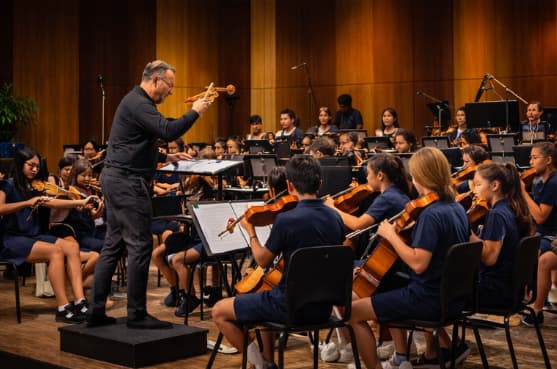
An elite IB education is not just academic. The strongest schools create opportunities for students to develop through sports, arts, clubs, and service activities. High-quality sports fields, swimming pools, gyms, music rooms, and art studios make it easier for students to explore interests beyond the classroom.
This matters because the IB values balance. Students are expected to grow not only as scholars, but also as communicators, team players, creators, and active members of the community. A school with strong extracurricular infrastructure can support that more effectively than one that is focused only on academics.
Holistic Development and Student Outcomes
One of the biggest reasons families choose top IB schools is the student outcome. Strong schools often guide students toward excellent university placements, including institutions in the UK, the US, Singapore, and other global destinations. University support usually includes application guidance, essay coaching, and interview preparation.
At the same time, elite schools place strong value on personal development. They build leadership, resilience, communication, and emotional intelligence through advisory systems, service projects, exchanges, and mentoring. Mental health support is increasingly important in 2026, and schools that provide counselors and structured wellbeing support often stand out to parents.
What Strong Student Outcomes Usually Look Like
| Area | Typical Strength in Elite IB Schools |
| University admissions | Strong placement at international universities |
| Academic confidence | Students become independent and analytical |
| Personal growth | Leadership, resilience, communication skills |
| Wellbeing | Counseling and support systems available |
| Long-term readiness | Graduates prepared for global study and work |
University Placement Success
University placement is often a key measure families look at when comparing schools. Elite IB schools typically provide personalized support rather than a one-size-fits-all process. Students receive help choosing subjects, planning future pathways, writing personal statements, and preparing for interviews.
Because the IB Diploma is highly respected worldwide, students from strong Thai IB schools often gain entry to competitive universities. A good placement record can reflect both the strength of the curriculum and the quality of individual support the school provides.
Personal Growth Programmes
Elite schools understand that academic achievement alone is not enough. Wellness programmes, advisory systems, peer mentoring, and leadership retreats all help students develop emotionally and socially. This is particularly valuable in international school environments, where children may be adjusting to new cultures, languages, and expectations.
Schools that do this well often create a stronger sense of belonging, which can positively affect both student happiness and academic performance.
Societal Impact and Community Engagement
The best IB schools in Thailand do not operate in isolation. They often build strong links with local communities, charities, and sustainability initiatives. This can include environmental projects, literacy programmes, fundraising work, or long-term service partnerships.
These activities matter because they help students connect learning to real social issues. They also reflect one of the IB’s biggest strengths: developing young people who are not only knowledgeable, but also caring and active in the world around them. In Thailand, this can be especially meaningful as schools bring together local and international families in a shared learning community.

Community Impact Areas
| Focus Area | Example |
| Sustainability | Beach cleanups, carbon reduction, eco projects |
| Social responsibility | Literacy work, food support, fundraising |
| Inclusion | Multilingual support and multicultural events |
| Citizenship | Service learning tied to real local issues |
Service, Sustainability, Diversity, and Inclusion
Service and sustainability are often built directly into the student experience. Many students complete substantial service hours through Creativity, Activity, Service programmes, helping them build empathy, initiative, and practical leadership.
Diversity and inclusion also shape the experience at leading schools. Multilingual support, international faculty, and anti-bias awareness create learning spaces where students from different backgrounds can thrive. This is especially important in Thailand’s international school sector, where many campuses serve both expatriate and Thai families.
Conclusion
Choosing among the best IB options can feel overwhelming, but families often find clarity by focusing on teaching quality, IB programme depth, student wellbeing, and the school’s overall learning environment. For parents exploring IB schools in Thailand, it is also worth considering how a school’s values align with your child’s personality, long-term goals, and preferred style of learning. As a respected Chiang Mai international school, we, at Panyaden International School, offer families a thoughtful perspective on what truly matters in an IB education: not only academic standards, but also holistic development, wellbeing, and a learning journey that helps children grow into capable, compassionate, and internationally minded individuals.
FAQ
1. What makes an IB school “elite” in Thailand?
An elite IB school usually combines strong IB authorization, experienced teachers, modern learning facilities, good student support, and strong university outcomes. It also tends to offer a more balanced education that includes wellbeing, service, sports, and the arts.
2. Is IB better than other international curricula?
IB is not automatically better for every child, but it is highly respected for its focus on inquiry, critical thinking, research, and global awareness. It often suits students who do well in discussion-based and reflective learning environments.
3. What should parents look for when comparing IB schools?
Look at programme authorization, teacher experience, class size, facilities, student support, extracurricular opportunities, and university placement results. Visiting the school can also help you understand the overall culture.
4. Are all IB schools in Thailand the same?
No. Even if two schools offer the IB, the quality of delivery can be very different. Factors such as teaching quality, leadership, campus resources, and school culture make a significant difference.
5. Why are facilities important in an IB school?
The IB encourages experiential learning, collaboration, creativity, and independent research. Good facilities make it easier for schools to deliver that approach effectively across science, arts, sports, design, and outdoor learning.
6. Do IB schools only focus on academics?
No. One of the main strengths of the IB is its holistic approach. Strong IB schools usually place equal importance on personal growth, community engagement, communication skills, and emotional wellbeing.
7. Are elite IB schools in Thailand only for expatriate families?
No. Many Thai families also choose IB schools because they want an internationally recognized education, English-language learning, and pathways to universities abroad.
8. How important is university placement when choosing a school?
It is important, but it should not be the only factor. A strong university placement record is valuable, but parents should also consider whether the school is the right fit for their child’s needs, confidence, and long-term development.